How to Source Occipitocervical Thoracic Spinal Systems 2026

Time:2026-10-14 Author:Aria
0%

Sourcing an Occipitocervical Thoracic Posterior Spinal System in 2026 requires more than comparing catalog prices. It demands clinical judgment, traceable evidence, and disciplined supplier evaluation. The World Health Organization reported that low back pain affected approximately 619 million people in 2020, with cases projected to reach 843 million by 2050. Although this figure covers broader spinal conditions, it shows the growing pressure on spinal care systems and implant supply chains.

Industry forecasts also indicate sustained expansion in the global spinal implants market. Reports from Grand View Research and Fortune Business Insights identify aging populations, degenerative disease, and surgical innovation as major growth drivers. Their market estimates differ, however. That difference matters. Buyers should question unclear assumptions, regional definitions, and outdated pricing models. A polished spreadsheet is not enough.

Look closely at the details. Confirm implant materials, screw diameter ranges, rod compatibility, locking mechanisms, and instrument completeness. Review sterilization information, packaging integrity, shelf life, and lot-level traceability. Verify the manufacturer’s quality system against ISO 13485 requirements and assess applicable regulatory clearances in each destination market. Clinical feedback from qualified surgeons can reveal practical weaknesses, such as difficult rod contouring or poor visibility at the occipital plate.

Supplier experience matters. So does documentation.

A reliable sourcing process should compare technical performance, surgeon familiarity, delivery consistency, training support, and total cost of ownership. The lowest quotation may conceal missing instruments, longer lead times, or limited revision support. In 2026, responsible procurement should combine published evidence with direct supplier audits. Some assumptions will remain imperfect. They should be recorded, tested, and revisited before patient care is affected.
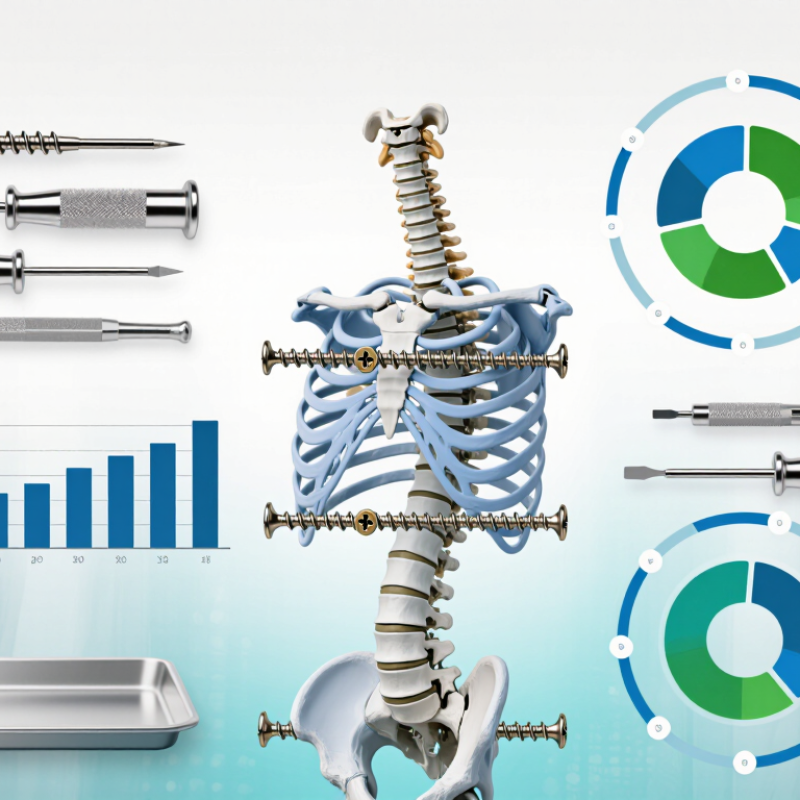
How to Source Occipitocervical Thoracic Spinal Systems 2026

Scope and Clinical Applications of Occipitocervical Thoracic Spinal Systems

Occipitocervical thoracic spinal systems stabilize the skull base, cervical spine, and upper thoracic region. Their scope extends beyond routine fusion. Surgeons may consider them for craniocervical instability, deformity, trauma, tumor-related destruction, infection, and selected revision cases. The construct must match bone quality, neurological risk, alignment goals, and imaging findings.

The World Health Organization reported 15.4 million people living with spinal cord injury globally in its 2024 fact sheet. This burden reinforces the need for dependable fixation pathways, especially when instability threatens breathing, movement, or rehabilitation. A practical sourcing review should assess screw options, rod adaptability, connectors, sterilization status, MRI conditions, and documented mechanical testing. Hospital teams should also confirm instrument completeness. Small gaps can delay surgery.

Clinical application is highly anatomy-dependent. Occipital fixation may support poor posterior bone stock, while cervical and thoracic anchors distribute corrective forces across longer constructs. In osteoporotic patients, purchase may remain limited. More hardware is not automatically safer. That assumption is too neat. The AO Spine community emphasizes patient-specific assessment, neurological examination, and radiographic planning in complex cervical disease. Procurement teams should request peer-reviewed evidence, post-market surveillance data, and clear training materials. Regulatory clearance alone does not prove suitability for every anatomy. I would also compare revision rates, not only initial procedural success, because early datasets can look reassuring.

How to Source Occipitocervical Thoracic Spinal Systems 2026

Scope and Clinical Applications of Occipitocervical Thoracic Spinal Systems

This chart shows representative fixation spans used when planning occipitocervical and cervicothoracic stabilization. The values represent the number of vertebral levels included from the occiput to the lowest instrumented level; actual construct length depends on instability, deformity, bone quality, neurological compression, surgical exposure, and intraoperative findings.

Key Components, Materials, and Design Requirements

How to Source Occipitocervical Thoracic Spinal Systems 2026

Key Components, Materials, and Design Requirements

Sourcing begins with the construct, not the catalogue. An occipital plate, cervical and thoracic screws, rods, connectors, hooks, and cross-links must function as one system. Confirm rod diameters, screw-head geometry, locking mechanisms, and instrument compatibility. Grand View Research estimated the global spinal implants market at about USD 10 billion in 2023, showing strong demand but also crowded supplier claims. The World Health Organization reports that musculoskeletal conditions affect roughly 1.71 billion people worldwide. Demand alone does not prove clinical suitability.

Material selection needs evidence. Titanium alloys offer useful strength, corrosion resistance, and imaging performance. Cobalt-chromium may provide greater rod stiffness, but it can change load distribution. Stainless steel remains relevant in some systems. Ask for material certificates, surface-finish data, fatigue results, and biological evaluation under ISO 10993. Construct testing should reference applicable ASTM methods, including F1717 for spinal assemblies. ISO 13485 certification supports quality controls, but it does not replace product-specific verification. I would also request MRI conditions, sterilization limits, and lot-level traceability. Some supplier documents remain vague here.

Tips: Build a comparison sheet. Record screw angulation, reduction range, rod size, torque limits, and imaging restrictions. Review worst-case fatigue data, not only average results. Ask whether tests used the final coating and locking interface. A missing detail may matter later. Require clear technical files, surgeon feedback, and post-market surveillance data before approval. Debate assumptions with engineering and clinical teams. That step is often skipped.

Regulatory Standards and Supplier Qualification in 2026

How to Source Occipitocervical Thoracic Spinal Systems 2026

In 2026, sourcing occipitocervical thoracic spinal systems requires more than comparing prices and catalogs. Buyers should verify the device classification in every target market. Regulatory files may need alignment with the EU Medical Device Regulation, United States quality requirements, or other national frameworks. Ask suppliers for current certificates, scope statements, audit results, and documented change-control procedures. A certificate without matching product scope is a warning sign.

Supplier qualification should examine the full production chain. Review design controls, risk management under ISO 14971, biocompatibility evidence, and sterilization validation where applicable. Confirm material certificates for titanium or other approved alloys. Traceability should reach each lot, component, and finished implant. Request samples of inspection records, packaging tests, and complaint-handling logs. Small details matter.

A practical audit includes a factory walk-through, not only a video call. Check clean handling areas, calibrated measurement tools, and quarantine labels on rejected parts. Ask how the supplier manages subcontractors and design changes. I have seen impressive documentation fail during a simple lot-traceability exercise. Spreadsheets are not enough. Clinical-use feedback should be reviewed with qualified surgeons and regulatory staff, while procurement teams avoid treating one successful sample as proof of consistent performance. Some requirements remain unclear across markets, so assumptions should be recorded, challenged, and revisited before purchase orders are released.

How to Source Occipitocervical Thoracic Spinal Systems 2026 - Regulatory Standards and Supplier Qualification in 2026

Category Qualification Dimension Applicable Requirement or Standard What to Verify in 2026 Recommended Evidence Procurement Risk Level
Regulatory system Quality management system ISO 13485:2016; applicable national medical-device quality regulations Valid certification covering design, manufacture, sterilization where applicable, and distribution activities relevant to spinal implants and instruments. Current certificate, scope statement, latest surveillance or recertification outcome, and major nonconformity closure records. Low when current and scope-matched
United States Quality System Regulation transition 21 CFR Part 820 Quality Management System Regulation, incorporating ISO 13485:2016 by reference; effective February 2, 2026 Supplier procedures should address design controls, purchasing controls, process validation, complaint handling, corrective actions, records, and risk-based controls under the updated framework. QMS transition assessment, internal audit results, FDA inspection history where available, and documented supplier-control procedures. Medium during transition
United States Device authorization pathway 510(k), De Novo, PMA, or applicable exemption, depending on device classification and intended use Confirm that the proposed occipitocervical or cervicothoracic construct is legally marketed for the intended anatomical location, indications, materials, and configuration. Regulatory decision documentation, intended-use statement, device listing information, labeling, and configuration matrix. High if indication is mismatched
European Union Medical device conformity Regulation (EU) 2017/745 on medical devices (MDR) Verify classification, conformity-assessment route, technical documentation, clinical evaluation, post-market surveillance, vigilance, and certificate validity for the exact device family. EU declaration of conformity, valid certificate where required, technical-documentation index, clinical evaluation summary, and post-market plan. High if documentation is incomplete
United Kingdom Market access UK Medical Devices Regulations 2002, as amended; current transitional arrangements should be checked before purchase Confirm whether the product uses an accepted conformity route and whether the supplier can meet current registration, labeling, and post-market obligations for the intended market. Market-access assessment, registration evidence where required, conformity certificate, labeling samples, and transition plan. Medium
Implant safety Biological evaluation ISO 10993 series, with biological evaluation planned according to the nature and duration of patient contact Check material identity, surface treatment, patient-contact duration, toxicological assessment, chemical characterization, and justification for any omitted tests. Material certificates, supplier declarations, ISO 10993 evaluation, chemical-characterization reports, and extractables or leachables rationale where applicable. High
Mechanical performance Static and fatigue strength of spinal constructs ASTM F1717 for spinal implant constructs, when applicable to the tested configuration Confirm that testing represents the complete construct, including rods, screws, connectors, plates, interfaces, and worst-case assembly conditions. Test protocol, sample configuration, conditioning details, load data, failure modes, acceptance criteria, and final laboratory report. High if configuration is not representative
Mechanical performance Connector and subassembly testing ASTM F1798, where relevant to interconnection mechanisms and subassemblies Evaluate tightening, locking, pull-apart, rotational, and fatigue behavior of connectors under clinically relevant assembly conditions. Connector test reports, torque specifications, use-condition assumptions, design verification records, and dimensional drawings. Medium to high
Fasteners and materials Screw and metallic component performance ASTM F543 for metallic medical bone screws, where applicable; relevant material specifications such as ASTM F136 or ASTM F67 for titanium materials Verify thread geometry, insertion torque, axial pullout, torsional behavior, corrosion resistance, alloy grade, heat treatment, and traceability. Material test certificates, heat-lot records, dimensional inspection, surface-finish results, and applicable ASTM test reports. High
Risk management Product and process risk controls ISO 14971:2019 The risk file should cover malposition, loosening, breakage, migration, neurological injury, vascular injury, infection, incompatibility, incorrect assembly, and use-related hazards. Risk-management plan, hazard analysis, risk-control traceability, benefit-risk assessment, residual-risk review, and production or post-market feedback. High
Sterilization Sterile supply and packaging integrity Applicable ISO 11135, ISO 11137, ISO 17665, ISO 11607, and ISO 11737 requirements, depending on sterilization method and product presentation Confirm validated sterilization cycle, bioburden control, packaging validation, shelf-life evidence, transport simulation, and requalification schedule. Sterilization validation, routine-release records, packaging validation, aging data, seal-strength results, and distribution testing. High for sterile products
Cleaning and reprocessing Reusable instruments ISO 17664-1 for information supplied by the manufacturer for processing of medical devices Instructions should address point-of-use treatment, cleaning, disinfection, inspection, lubrication where applicable, sterilization, drying, storage, and maximum reuse limitations. Validated reprocessing instructions, worst-case cleaning studies, inspection criteria, maintenance requirements, and usability review. Medium to high
Manufacturing control Special processes and validation Risk-based process validation under ISO 13485 and applicable regulatory requirements Identify processes whose output cannot be fully verified by inspection, including coating, passivation, cleaning, heat treatment, welding, laser marking, and sterilization. Validation protocols and reports, equipment qualification, operator qualification, process capability data, and change-control history. High
Traceability Implant and material lot control Applicable device-identification and traceability requirements in the target market Each implant and critical component should be traceable to raw material, manufacturing batch, inspection results, packaging, sterilization, and release status. Unique device or catalog identification, lot records, traveler documents, certificates of conformity, and electronic or paper traceability samples. High
Supplier management Critical subcontractor oversight ISO 13485 purchasing controls and risk-based supplier evaluation Map all critical subcontractors for machining, coating, cleaning, sterilization, packaging, testing, and logistics; confirm approval and ongoing monitoring. Approved-supplier list, quality agreements, subcontractor audits, supplier scorecards, and notification-of-change clauses. Medium to high
Clinical and labeling Intended use and surgical instructions Applicable labeling, clinical-evidence, and instructions-for-use requirements in the target jurisdiction Check indications, contraindications, patient selection, warnings, anatomical levels, imaging guidance, torque values, compatibility limits, and revision or removal instructions. Current labeling, instructions for use, surgical technique documentation, clinical evaluation, complaint trends, and field-safety notices. High
Commercial qualification Supply continuity and capacity Purchasing continuity requirements defined by the buyer’s quality and risk-management system Assess lead time, minimum order quantities, reserved capacity, critical raw-material availability, dual sourcing, inventory policy, and disaster recovery. Capacity statement, business-continuity plan, inventory and forecast policy, supply-risk register, and escalation contacts. Medium
Change control Notification of design, material, process, and facility changes Contractual quality agreement aligned with regulatory change-reporting obligations Require advance notification for changes affecting material grade, dimensions, software, tooling, manufacturing location, sterilization, packaging, or critical subcontractors. Signed quality agreement, change-notification procedure, regulatory-impact assessment template, and change-history sample. High
Final supplier decision Approval gate for sourcing Risk-based supplier qualification and documented purchasing approval Approve only when regulatory status, technical evidence, quality-system controls, sample evaluation, commercial capacity, and corrective-action performance meet predefined criteria. Completed supplier questionnaire, audit report, technical review, sample inspection, risk rating, corrective-action plan, and signed approval record. Controlled approval required
Qualification principle: Regulatory evidence should be verified for the exact product configuration, intended anatomical use, manufacturing site, sterilization status, and target market rather than accepted solely on the basis of a general certificate.

Procurement Workflow, Cost Analysis, and Contract Considerations

Sourcing occipitocervical thoracic spinal systems in 2026 requires a documented procurement workflow. Start with clinical specifications: fixation levels, screw diameter ranges, rod compatibility, imaging needs, and revision scenarios. Ask suppliers for regulatory clearance, sterilization records, biocompatibility evidence, and failure-rate data. The 2024 MarketsandMarkets report estimated the global spinal implants market at more than USD 10 billion, with continued mid-single-digit growth. That growth can increase supplier choice, but it may also complicate comparison.

Cost analysis should separate acquisition price from the complete episode cost. Include instruments, trays, freight, inventory holding, training, loaner terms, returns, and postoperative complications. A practical request for quotation should show unit prices, volume tiers, annual increases, and replacement charges. Use at least three comparable bids. Then test a five-year total-cost model. The spreadsheet will still be imperfect. Clinical preference can shift unexpectedly.

Tips: Build a weighted scorecard before reviewing bids. Give safety and interoperability greater weight than discounts.

Request written service-level targets, delivery timelines, and contingency stock. Contracts should define warranties, product recalls, adverse-event cooperation, audit rights, data protection, and termination triggers.

The 2023 AHRQ patient-safety literature emphasizes standardized processes and traceable device information. Therefore, require lot-level tracking from receipt to implantation.

Review proposed price increases against published medical-device inflation data, not general inflation alone. Have clinical, supply-chain, finance, and legal reviewers sign the final evaluation.

Quality Control, Traceability, and Post-Purchase Evaluation

Sourcing occipitocervical thoracic spinal systems requires more than comparing prices. Quality control begins with documented material specifications, dimensional tolerances, surface inspection, and validated sterilization information. Ask for lot-specific certificates, inspection records, and clear instructions for storage and handling. Samples should match production units, not only promotional examples. Small gaps matter.

Traceability should follow every component from manufacture to delivery. Record the product code, lot number, shipment date, and receiving staff member. Packaging deserves close attention. Check seals, labels, damage, and expiration details before inventory acceptance. Digital records help, but they need controlled access and regular backups. A spreadsheet alone may become unreliable when revisions are not logged.

Post-purchase evaluation should include staff feedback, packaging performance, documentation quality, and reported device issues. Review these findings at defined intervals, such as thirty and ninety days after delivery. Our first review once focused heavily on delivery speed and missed a recurring labeling problem. That mistake changed our checklist. Evidence from actual use is valuable, but it should be separated from personal preference. Compare findings with approved specifications and applicable regulatory requirements. When concerns appear, pause distribution through internal procedures and request a documented response from the supplier. A dependable sourcing process remains open to correction.

FAQS

When might an occipitocervical thoracic spinal system be considered?

Surgeons may consider it for craniocervical instability, deformity, trauma, infection, tumors, or selected revision procedures. The construct should match bone quality, alignment goals, neurological risk, and imaging findings.

Why does anatomy matter during system selection?

Occipital, cervical, and thoracic bones provide different fixation opportunities. Longer constructs can distribute corrective forces. More hardware is not automatically safer. That assumption needs review.

What clinical information should procurement teams request?

Request screw ranges, rod compatibility, MRI conditions, sterilization records, and mechanical testing data. Also request peer-reviewed evidence and post-market surveillance results. Regulatory clearance alone may not fit every anatomy.

How should hospitals compare total costs?

Separate the purchase price from the complete treatment episode. Include instruments, freight, training, storage, loaners, returns, and complications. Use at least three comparable bids. Then model five-year costs.

What should a supplier contract clearly define?

Define warranties, recalls, delivery targets, replacement charges, audit rights, and termination conditions. Include cooperation for adverse events and product investigations. Set written price-adjustment rules. Discounts are not everything.

How can a hospital improve device traceability?

Record each product code, lot number, shipment date, and receiving staff member. Track every component from manufacture through implantation. Digital records need controlled access and regular backups. A basic spreadsheet may become unreliable.

What quality checks should occur before inventory acceptance?

Inspect package seals, labels, damage, expiration details, and storage conditions. Review material specifications, dimensions, surface quality, and sterilization documentation. Samples should represent production units, not only demonstrations.

How should post-purchase performance be reviewed?

Collect feedback about delivery, packaging, documentation, and device concerns. Review findings around thirty and ninety days after delivery. Compare actual use with approved specifications. Our checklist may still miss recurring problems.

Conclusion

Sourcing an Occipitocervical Thoracic Posterior Spinal System in 2026 requires a structured evaluation of clinical applications, component design, material performance, and supplier reliability. Buyers should assess compatibility with occipital, cervical, and upper thoracic anatomy, while reviewing implant configurations, fixation options, instrumentation, corrosion resistance, fatigue strength, and imaging compatibility. Materials and design specifications should support secure fixation, surgical efficiency, patient safety, and appropriate procedural flexibility.

A responsible procurement process should include regulatory documentation, supplier qualification, quality management review, product validation, and clear technical specifications. Cost analysis should consider the complete system, instruments, training, logistics, maintenance, and potential replacement requirements rather than unit price alone. Contracts should define delivery conditions, acceptance criteria, warranties, and corrective-action responsibilities. After purchase, hospitals should maintain lot-level traceability, inspect incoming products, monitor clinical feedback, and conduct periodic evaluations of quality, performance, and supplier responsiveness.

Aria

Aria

Aria is a dedicated marketing professional with a deep passion for innovative strategies and a keen understanding of our company's product offerings. With a wealth of experience in the industry, Aria excels at crafting engaging content that highlights the unique features and benefits of our......