2026 Best Anterior Cervical Plate Manufacturers?

Time:2026-09-24 Author:Mason
0%

Choosing the 2026 best Anterior Cervical Plate manufacturers requires more than comparing product photographs or catalog prices. A dependable evaluation examines implant design, manufacturing discipline, clinical evidence, and long-term support. Surgeons may inspect plate thickness, screw angulation, locking mechanisms, and compatibility with common cervical anatomy. Small details matter. A plate that sits smoothly against the vertebral surface may reduce prominence concerns and simplify intraoperative handling.

Experienced manufacturers usually demonstrate controlled production, material traceability, documented quality systems, and consistent inspection records. Evidence may include peer-reviewed studies, post-market surveillance, surgeon feedback, and transparent complication reporting. ISO 13485 certification can support confidence, but certification alone does not prove superior clinical performance. Regional regulatory clearance is also important, especially when hospitals assess procurement and product availability across different markets.

No ranking is flawless. A polished brochure can still conceal limited independent evidence. Conversely, a smaller manufacturer may offer thoughtful engineering and responsive technical service. That deserves attention. The strongest comparison therefore considers design performance, manufacturing reliability, surgeon experience, and patient-centered outcomes together. It should also examine revision support, instrument ergonomics, supply continuity, and training resources. In 2026, the most credible Anterior Cervical Plate manufacturers will likely be those that communicate limitations clearly, improve products through verified feedback, and maintain evidence beyond launch. Careful readers should question marketing language, request current documentation, and distinguish genuine clinical value from attractive specifications.
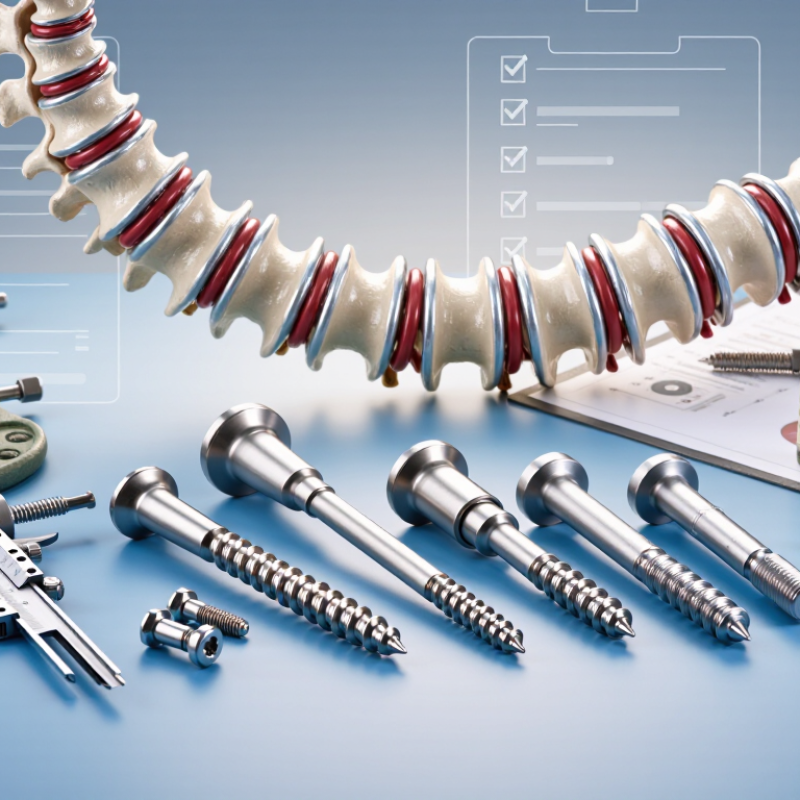
2026 Best Anterior Cervical Plate Manufacturers?

Anterior Cervical Plates: Indications, Anatomy, and 2026 Evaluation Criteria

Anterior Cervical Plates: Indications, Anatomy, and 2026 Evaluation Criteria

Anterior cervical plates help stabilize the neck after spinal fusion. Common indications include degenerative disc disease, instability, trauma, and selected deformities. Surgeons also consider reconstruction after removing a damaged vertebral body. The cervical spine contains the spinal cord, nerve roots, esophagus, trachea, and major blood vessels. Plate design must respect these nearby structures. A low profile may reduce soft-tissue irritation. However, it does not guarantee better clinical outcomes. Small differences matter.

In 2026, evaluating anterior cervical plate manufacturers requires more than comparing prices or marketing claims. Clinical teams should review published evidence, material specifications, fatigue testing, screw-locking performance, and sterilization controls. Traceability is essential. Each component should have clear documentation and consistent quality records. Surgeons may also examine intraoperative handling, visibility under imaging, and compatibility with grafts or cages. Hospitals should assess training support and post-market reporting procedures. Reliable communication matters when an unexpected issue appears.

The strongest assessment combines anatomy, surgical experience, and independent evidence. A plate that performs well in one spinal level may not suit another. Multilevel procedures can create different load demands. Patient bone quality also changes fixation requirements. These details are easy to overlook. No checklist replaces careful case selection. Even experienced teams may disagree about the best profile or screw angle. That uncertainty deserves discussion, not polished promises. Manufacturer evaluation should remain evidence-based, transparent, and open to revision as longer-term data develops.

ISO 13485:2016, FDA 510(k), and CE MDR Compliance Benchmarks

2026 Best Anterior Cervical Plate Manufacturers?

For 2026 sourcing, compliance should outweigh polished catalogs. Anterior cervical plate manufacturers should hold a current ISO 13485:2016 certificate covering relevant design and manufacturing activities. Check the certificate scope, issuing body, expiration date, and production site. A certificate alone proves little.

For the United States, review the FDA 510(k) clearance and its substantial-equivalence basis. Confirm that the cleared device matches the offered plate system, sizes, materials, and intended use. Ask for labeling, predicate details, complaint trends, and change-control records. Small differences matter. Titanium grade, screw locking, and imaging compatibility can affect clinical risk.

For European distribution, verify CE MDR status under Regulation (EU) 2017/745. Request the declaration of conformity, applicable certificate, technical documentation index, clinical evaluation evidence, and post-market surveillance procedures. Check UDI readiness and vigilance processes. A manufacturer should also show risk management aligned with ISO 14971 and traceability from raw material to finished implant.

Audit evidence in practice. Review batch records, inspection data, sterilization validation, and packaging integrity reports. Visit the facility when possible. A clean audit trail builds confidence. Still, no document removes every uncertainty. Certificates may be current while supplier controls remain weak. Some records are incomplete. That deserves a documented corrective action, not an automatic rejection. Procurement teams should compare regulatory evidence, engineering support, and response quality before selecting a long-term manufacturing partner.

2026 Best Anterior Cervical Plate Manufacturers? — ISO 13485:2016, FDA 510(k), and CE MDR Compliance Benchmarks

This chart compares the core compliance evidence associated with the three main regulatory frameworks. A value of 1 means the area is a central requirement or regulatory deliverable; 0 means it is outside that framework’s core scope. It is a framework comparison, not a ranking of manufacturers.

Reference basis: ISO 13485:2016 quality-management requirements; FDA 510(k) substantial-equivalence pathway and applicable quality-system obligations; Regulation (EU) 2017/745 requirements for conformity assessment, clinical evaluation, CE marking, and post-market surveillance.

1–4-Level Plate Systems: Titanium, PEEK, and Locking-Mechanism Comparison

2026 Best Anterior Cervical Plate Manufacturers?

1–4-Level Plate Systems: Titanium, PEEK, and Locking-Mechanism Comparison

Selecting an anterior cervical plate requires more than comparing catalog images. For one-level procedures, a compact titanium plate may provide efficient contouring and strong screw fixation. In two- to four-level constructs, profile height, plate stiffness, and screw angulation deserve closer review. Titanium offers familiar strength and radiographic visibility. PEEK can improve imaging clarity, but its performance depends on design, fixation, and clinical context. No material wins every case.

Locking mechanisms also vary significantly. Fixed-angle screws can simplify alignment, while variable-angle systems may help accommodate changing anatomy. A reliable plate should resist back-out under expected loading and maintain consistent locking during insertion. Surgeons should examine instrument ergonomics, hole preparation, and intraoperative visibility. A neat comparison can still mislead. Manufacturer data should be checked against regulatory documentation, mechanical testing, sterilization instructions, and published clinical evidence.

Tips: Match the system to the number of treated levels, bone quality, and surgical approach. Ask whether the implant supports controlled compression without excessive soft-tissue prominence. Review screw-locking feedback using trial instruments, not brochures alone. For four-level cases, confirm construct stability with independent biomechanical evidence. Also inspect packaging, traceability, and quality-system credentials. Small details matter. Titanium may be practical, while PEEK may suit selected imaging priorities, but neither choice replaces surgeon judgment or patient-specific planning.

Clinical Evidence: Fusion, Subsidence, and Dysphagia Rates at ≥2 Years

2026 Best Anterior Cervical Plate Manufacturers?

Clinical Evidence: Fusion, Subsidence, and Dysphagia Rates at ≥2 Years

At two years or longer, a plate’s value is better judged by patient outcomes than by appearance on an imaging scan. A systematic review by Shriver et al. in Global Spine Journal reported pooled dysphagia rates of about 6% in long-term follow-up after anterior cervical surgery. That figure is not a direct comparison of plate manufacturers. Surgical levels, assessment methods, and patient risk factors differ across studies. Some patients still report trouble swallowing dry food or pills well after surgery.

Fusion and subsidence also need careful interpretation. Reviews of anterior cervical fusion studies report generally high fusion rates, but estimates vary with imaging criteria and the number of treated levels. Subsidence is commonly reported in the literature, yet pooled estimates are difficult to compare because studies use different thresholds, such as a measured loss of disc height on follow-up imaging. Small changes may not cause symptoms. Larger changes can affect alignment or foraminal height. Look for studies that report follow-up of at least two years, define fusion and subsidence clearly, and include patient-reported swallowing outcomes. The evidence is imperfect; a clean radiograph alone does not tell the whole clinical story.

Manufacturer Due Diligence: ASTM Testing, Traceability, and Global Service

Choosing a 2026 anterior cervical plate manufacturer requires more than reviewing a product catalogue. ASTM F1717 testing should show how the complete spinal construct performs under controlled compression, bending, and fatigue conditions. Testing details matter: specimen design, screw configuration, cycle count, failure mode, and laboratory accreditation should be visible. ASTM F543 also supports evaluation of metallic bone screws, while ASTM F2077 applies mainly to interbody devices, not plates.

Traceability is equally practical. Ask whether each plate, screw, and raw-material batch connects to inspection records, sterilization data, and final release documents. ISO 13485 provides the quality framework, but certification alone proves limited clinical readiness. The ISO Survey 2023 reported more than 38,000 ISO 13485 certificates worldwide. That number shows broad adoption, not equal manufacturing depth.

Global service should include multilingual technical files, surgeon training, complaint response, and replacement logistics. FDA medical-device reporting emphasizes the importance of post-market surveillance and corrective action records. Request anonymized trend data, not polished claims. A reliable supplier should explain field failures without defensiveness. That is often revealing. Also check whether test samples represent current production, because an old validation report may describe a different alloy, coating, or screw design. Documentation can look complete and still leave uncomfortable gaps.

2026 Best Anterior Cervical Plate Manufacturers? — Manufacturer Due Diligence: ASTM Testing, Traceability, and Global Service

Manufacturer-neutral evaluation matrix for comparing anterior cervical plate suppliers without relying on brand claims.

Use this matrix to request objective evidence from each manufacturer. Standards and regulatory requirements should be confirmed for the intended device design, market, material, sterilization method, and risk classification.
Due-Diligence Area Evaluation Dimension Applicable Standard or Regulatory Reference Evidence to Request Priority Pass Rule
Product Safety Construct fatigue and static performance ASTM F1717, Standard Test Methods for Spinal Implant Constructs in a Vertebrectomy Model Complete test report identifying the plate, screws, locking features, test configuration, loading conditions, sample size, failure definition, results, and laboratory accreditation status. Critical Verified
Product Safety Plate material and mechanical properties ASTM F382 for metallic bone plates; material specifications such as ASTM F136 for titanium alloy or ASTM F138 for stainless steel, where applicable Material certificate, heat or lot identification, chemical composition, tensile properties, surface condition, and confirmation that the tested material matches production material. Critical Verified
Product Safety Bone screw performance and compatibility ASTM F543 for metallic medical bone screws; device-specific design verification requirements Insertion torque, pullout, torsional strength, fatigue, drive-interface, locking mechanism, and plate-screw angular stability data for the exact screw and plate combination. Critical Verified
Biocompatibility Biological safety of patient-contacting materials ISO 10993 series and ISO 14971 risk-management principles Biological evaluation plan and report covering the nature and duration of contact, material characterization, toxicological assessment, and justification for any omitted testing. Critical Complete
Quality System Medical-device quality management system ISO 13485:2016; United States Quality Management System Regulation, effective February 2, 2026, where applicable Current certificate, certification scope, issuing body, expiration date, site coverage, recent audit status, and evidence that design, supplier, complaint, and CAPA processes are included. Critical Current
Risk Management Design and process risk control ISO 14971 Device risk-management file or controlled summary covering screw loosening, migration, breakage, subsidence-related risks, corrosion, patient anatomy, instrumentation misuse, and foreseeable use errors. High Accepted
Traceability Lot, material, process, and distribution traceability ISO 13485; applicable UDI and medical-device record requirements in the destination market Sample device history record showing raw-material heat number, production lot, inspection results, sterilization lot if applicable, release approval, packaging identification, and distribution records. Critical End-to-end
Manufacturing Control Special-process validation and inspection control ISO 13485; ISO 17025 for competent testing laboratories; applicable process-validation guidance Validation files for cleaning, passivation, coating, laser marking, machining, packaging, and sterilization; calibration records; acceptance criteria; and nonconformance controls. High Validated
Packaging Sterile-barrier and transport protection ISO 11607-1 and ISO 11607-2; applicable distribution testing such as ASTM D4169 Packaging validation, seal-strength and integrity data, aging rationale, transport simulation, labeling controls, and evidence that packaging maintains sterility through the stated shelf life. High Validated
Sterilization Sterilization method and residual control ISO 11135 for ethylene oxide, ISO 11137 for radiation, or ISO 17665 for moist heat, depending on the validated method Sterilization validation, routine-release parameters, bioburden and sterility-assurance data, residual testing where relevant, reprocessing instructions, and change-control records. Critical Validated
Regulatory Readiness Market-specific authorization and technical documentation EU Medical Device Regulation (EU) 2017/745, United States FDA requirements, and equivalent rules in the target market Applicable registration or authorization, declaration of conformity where relevant, device classification rationale, labeling, clinical evaluation or performance evidence, and post-market surveillance procedure. Critical Applicable
Clinical Support Surgical technique and instrumentation support Applicable labeling, usability engineering, and risk-management requirements Controlled surgical technique, implant and instrument compatibility matrix, training materials, multilingual instructions, instrument maintenance requirements, and documented usability validation where applicable. High Available
Global Service Supply continuity and regional fulfillment ISO 13485 purchasing and production-control principles; destination-market import and distribution requirements Documented lead times, minimum order quantities, safety-stock policy, regional inventory locations, approved distributors, business-continuity plan, and escalation contacts. High Documented
Post-Market Complaint handling, vigilance, and corrective action ISO 13485; ISO 14971; destination-market vigilance and reporting rules Complaint-response procedure, investigation timelines, recall or field-action process, trend reporting, CAPA examples with confidential data removed, and customer notification controls. Critical Auditable
Commercial Control Change notification and supply agreement controls ISO 13485 design and change-control requirements Written agreement covering advance notice for material, design, manufacturing-site, sterilization, packaging, labeling, and supplier changes, plus requalification responsibilities. High Contractual

FAQS

What should be checked on an ISO 13485:2016 certificate?

Confirm its scope, issuing body, expiration date, and covered production site. A current certificate alone proves little.

How can a buyer verify FDA 510(k) clearance matches a plate system?

Compare the cleared device with the offered system, including sizes, materials, and intended use. Ask for labeling and predicate details.

What evidence matters for CE MDR distribution in Europe?

Review the declaration of conformity, applicable certificate, clinical evaluation evidence, technical documentation index, and post-market procedures.

What records help assess manufacturing quality?

Check batch records, inspection data, sterilization validation, packaging integrity, and material traceability. Missing records deserve documented follow-up.

Why do titanium grade and screw locking details matter?

Small design differences can affect clinical risk. Imaging compatibility also deserves a close look.

How should long-term swallowing outcomes be interpreted?

One review reported about 6% dysphagia in long-term follow-up after anterior cervical surgery. This is not a manufacturer comparison.

What makes fusion and subsidence rates hard to compare?

Studies may use different imaging criteria, follow-up periods, and definitions. A small disc-height change may not cause symptoms.

What should a useful study with at least two years of follow-up report?

It should define fusion and subsidence clearly and include patient-reported swallowing outcomes. A clean radiograph is not the whole story.

Does a strong audit trail remove all uncertainty?

No. Supplier controls may still be weak, and some records may be incomplete. That deserves a corrective action, not an instant rejection.

What should procurement teams weigh when choosing a manufacturing partner?

Compare regulatory evidence, engineering support, and response quality. Clinical outcomes need careful interpretation, too.

Conclusion

Selecting the best Anterior Cervical Plate in 2026 requires more than comparing product designs or pricing. A reliable evaluation should begin with appropriate clinical indications, cervical anatomy, and the demands of one- to four-level procedures. Key technical considerations include titanium and PEEK options, plate profile, screw angulation, and locking mechanisms that may influence stability, imaging, and ease of use. Manufacturers should also demonstrate quality-system compliance aligned with ISO 13485:2016, applicable FDA 510(k) requirements, and CE MDR expectations.

Clinical performance should be assessed through credible evidence, including fusion outcomes, subsidence, revision rates, and dysphagia data reported at two years or longer. Further due diligence should review ASTM-based mechanical testing, material and lot traceability, sterilization controls, technical documentation, surgeon education, and global service capabilities. By combining clinical relevance, regulatory readiness, transparent testing, and long-term support, hospitals and surgeons can make a more objective and responsible choice for anterior cervical reconstruction.

Mason

Mason

Mason is a seasoned marketing professional with a deep expertise in the company's offerings and a passion for driving brand awareness. With a strong background in digital marketing strategies, he has an innate ability to connect with diverse audiences and effectively communicate product benefits.......