2026 Top Spinal System Instrument Suppliers?

Time:2026-10-27 Author:Liam
0%

Choosing among the 2026 Top Spinal System Instrument Suppliers requires more than comparing product catalogs. Hospitals and distributors must examine engineering quality, clinical suitability, traceability, and long-term service. An Instrument of Spinal System should support controlled handling during demanding procedures. Its design may influence workflow, imaging access, sterilization, and surgeon confidence.

This overview will examine suppliers through practical and verifiable criteria. These include manufacturing experience, material selection, quality-management certifications, regulatory documentation, and post-sale support. Reliable suppliers should provide clear specifications, validated sterilization guidance, and consistent lot tracking. They should also explain how instruments perform across anterior, posterior, and minimally invasive spinal procedures. A polished website is not enough.

Evidence matters more.

Supplier reputation can change quickly. Product availability, regional approvals, and service capacity may differ in 2026. Buyers should confirm current certificates, authorized distribution channels, warranty terms, and clinical feedback before making decisions. Independent surgeon evaluations can be valuable, but they may reflect personal preference rather than universal performance. That limitation deserves attention.

This guide is intended to help readers compare leading manufacturers with greater discipline. It does not replace hospital procurement policies, regulatory review, or professional clinical judgment. Some supplier information may remain incomplete or difficult to compare fairly. That is a real weakness. Therefore, the final assessment should combine documented evidence, hands-on evaluation, and feedback from qualified spinal-care teams. Procurement decisions should remain transparent, patient-focused, and based on measurable performance rather than marketing claims.
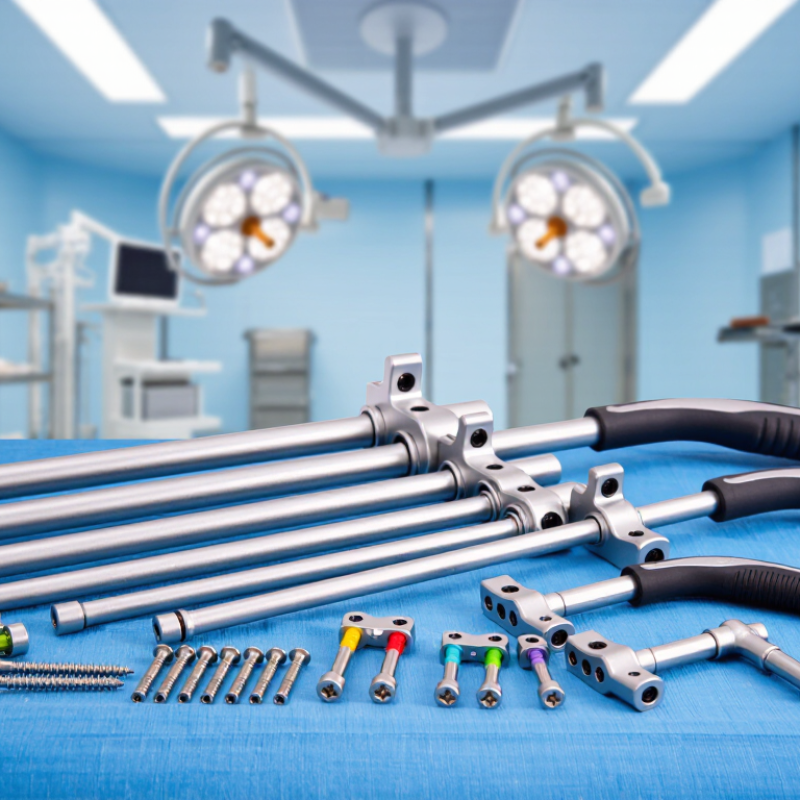
2026 Top Spinal System Instrument Suppliers?

What Are Spinal System Instruments and Why Do They Matter?

Spinal system instruments are specialized tools used to access, prepare, align, and stabilize the spine during surgery. They may include retractors, screwdrivers, drills, taps, rods, guides, and implant-specific drivers. Each tool has a defined role. A typical instrument tray can contain dozens of carefully arranged pieces. Surgeons depend on clear markings, balanced handles, and predictable movement. Small errors matter. A poorly fitting driver can damage an implant or interrupt a critical step. Instrument quality also affects visibility, control, and operating time. These tools must withstand repeated sterilization without losing accuracy or strength.

When evaluating top spinal system instrument suppliers in 2026, hospitals should examine more than product catalogs. Reliable suppliers provide traceable materials, validated cleaning instructions, maintenance guidance, and precise technical documentation. Training should reflect real surgical workflows, not only polished demonstrations. Independent clinical evidence and transparent regulatory records also support responsible purchasing decisions. Fit varies between surgeons, procedures, and patient anatomy. No instrument system is perfect. Some evaluations still focus too heavily on appearance or price. That deserves a second look. Experienced teams often test grip comfort, connection stability, tray organization, and access in realistic simulated procedures. Feedback from surgeons, nurses, and sterile-processing staff can reveal problems that specifications miss.

How Are Spinal System Instrument Suppliers Evaluated in 2026?

In 2026, evaluating spinal system instrument suppliers requires more than comparing catalog prices. Surgical teams examine how instruments feel during demanding procedures. A driver should grip securely with wet gloves. A retractor should open smoothly, without sudden resistance. These details reveal practical experience. Suppliers should provide documented testing, material specifications, and instructions that clinical staff can verify. Independent evidence matters. Claims without methods deserve caution. Very few systems are perfect.

Quality systems are assessed through traceability, inspection records, and consistent lot control. Hospitals may ask how a damaged instrument is reported, replaced, and investigated. Sterilization guidance must be clear, current, and compatible with local workflows. Training also matters. A supplier offering realistic demonstrations can reduce avoidable handling errors. Evaluators should review feedback from surgeons, nurses, and sterile-processing personnel, not only sales teams. Service response should be measured in hours and days, not vague promises.

Compatibility is another practical test. Instruments should connect reliably with intended implants and remain usable across approved configurations. Evaluators can inspect prototypes, simulate setup, and record tray weight, labeling clarity, and cleaning access. Total cost includes maintenance, training, repairs, and instrument turnover. Digital tracking tools may improve visibility, but they must protect operational data. Some evaluation teams overvalue polished presentations. That is a weakness. A transparent supplier will disclose limitations, revision history, and unresolved user concerns. Evidence should remain stronger than confidence.

2026 Top Spinal System Instrument Suppliers? - How Are Spinal System Instrument Suppliers Evaluated in 2026?

Supplier evaluation framework based on regulatory readiness, product quality, technical capability, supply continuity, and total cost of ownership

Evaluation Dimension Weight Objective Evidence Required 2026 Evaluation Benchmark Scoring Scale
Quality Management System 15% Current quality certificate, audit reports, corrective-action records, change-control procedures A documented medical-device quality system aligned with ISO 13485:2016; no unresolved critical audit findings 0–5
Regulatory and Market Access 15% Product classification, technical documentation, registration status, labeling, post-market surveillance records Clear regulatory pathway for each target market, supported by applicable device records and current labeling controls 0–5
Risk Management and Design Controls 10% Risk-management file, design verification, validation protocols, usability assessment, traceability matrix Risk controls documented in accordance with ISO 14971 principles and linked to verification and validation evidence 0–5
Material and Biocompatibility Control 10% Material certificates, supplier declarations, corrosion testing, cleaning validation, biocompatibility assessment where applicable Material identity and grade are traceable to controlled specifications; patient-contact risks are assessed using applicable biological-evaluation methods 0–5
Mechanical Performance and Compatibility 10% Torque, fatigue, static strength, dimensional inspection, interface compatibility, sterilization-cycle testing Test methods are defined before testing, acceptance criteria are documented, and results cover the intended spinal procedure and instrument interface 0–5
Manufacturing and Process Capability 10% Process flow, inspection plans, equipment calibration, validation records, nonconformance and rework controls Critical processes are validated or verified; inspection equipment is calibrated; lot and serial-number traceability is available 0–5
Sterilization and Reprocessing Support 8% Cleaning instructions, reusable-device validation, sterilization parameters, packaging specifications, user training materials Validated reprocessing instructions are supplied for reusable instruments, including inspection criteria and defined reuse limitations where applicable 0–5
Supply Continuity and Capacity 10% Capacity plan, critical-component sourcing, business-continuity plan, inventory policy, lead-time history At least one documented continuity plan exists for critical materials and operations; quoted lead times are supported by production data 0–5
Delivery and Customer Service 5% On-time delivery records, complaint-response procedure, technical-support coverage, training and documentation services Service-level commitments are measurable, escalation contacts are defined, and complaint handling is documented 0–5
Total Cost of Ownership 5% Unit price, instrument-set cost, maintenance, repair, sterilization, training, logistics and replacement costs Evaluation uses the complete lifecycle cost rather than purchase price alone; assumptions are documented and comparable 0–5
Recommended Decision Rule Use a weighted score out of 100. A supplier should normally achieve at least 75/100, score at least 3/5 in regulatory readiness and quality management, and have no unresolved critical safety or compliance issue.

Scoring Guidance

0 = No evidence; 1 = Major gaps; 2 = Partial evidence; 3 = Meets minimum requirements; 4 = Strong and consistently documented; 5 = Best-practice evidence with verified performance history. Regulatory requirements vary by device type and destination market, so final qualification should be completed through documented technical, quality, and legal review.

Which Companies Lead the 2026 Spinal Instrument Supplier Market?

In 2026, leading spinal instrument suppliers are defined by more than product volume. The strongest companies combine precise manufacturing, documented testing, and dependable hospital support. They provide systems for minimally invasive, open, and complex revision procedures. Their instruments must offer stable grip, accurate alignment, and smooth compatibility with implants.

Experience matters in the operating room. Suppliers with long clinical feedback cycles often improve handle design, sterilization workflows, and instrument durability. Regulatory knowledge also separates serious manufacturers from temporary market entrants. Buyers should review quality certificates, traceability records, surgeon training, and response times for repairs. A polished catalog is not enough. Real performance appears under pressure, during a long procedure, when a small mismatch becomes a serious delay.

Tips: Compare suppliers using a written scorecard. Check fatigue resistance, cleaning instructions, loaner availability, and technical support. Ask for evidence from hospitals or qualified clinical users. Do not judge solely by price. Lower costs may hide weaker ergonomics or limited after-sales service. Even experienced purchasing teams can overlook staff training and storage requirements. That deserves a second look. The leading supplier is not always the largest company; it is the one that consistently supports safe, efficient, and measurable clinical work.

What Product Categories Do Top Spinal System Suppliers Provide?

Top spinal system suppliers typically cover several connected product categories. Their core portfolios include spinal implants, surgical instruments, fixation systems, and biologic materials. Implants may include interbody cages, pedicle screws, rods, plates, and motion-preserving devices. Instruments support preparation, insertion, alignment, and revision procedures. The details matter. A tray with poorly balanced handles can slow a demanding operation.

Grand View Research estimated the global spinal implants market at more than USD 12 billion in 2023. Its analysis also projects steady growth through 2030, supported by aging populations and increasing spinal procedures. Fortune Business Insights similarly identifies fusion devices, non-fusion devices, and spinal biologics as major market segments. These categories often overlap in practice. A supplier may package implants with dedicated delivery tools and navigation-compatible components.

Advanced suppliers increasingly provide navigation-ready instruments, expandable implants, minimally invasive access tools, and patient-specific planning support. Some portfolios also include bone graft substitutes and biologic adjuncts, where regulatory evidence and clinical training become especially important. However, market growth does not automatically prove better patient outcomes. Category labels can hide major differences in materials, testing, surgeon familiarity, and revision support. I would examine published clinical evidence, sterilization instructions, instrument durability data, and post-market reporting before judging a supplier. Product breadth looks impressive, but usability remains the harder test.

Leading spinal system suppliers typically provide portfolios covering fixation, fusion, cervical stabilization, deformity correction, minimally invasive procedures, and surgical navigation compatibility. The scores represent category-level portfolio importance on a five-point scale, not company sales data or market share.

How Should Hospitals Select a Reliable Spinal Instrument Supplier?

Hospitals should judge spinal instrument suppliers through clinical reliability, not catalogue size. WHO’s 2022 Global Report on Infection Prevention and Control estimates that 7 in 100 acute-care patients in high-income countries acquire at least one healthcare-associated infection. In low- and middle-income countries, the estimate rises to 15 in 100. Reprocessing support therefore matters.

Ask suppliers for documented cleaning instructions, sterilization compatibility, material specifications, and lot-level traceability. Instruments should arrive with clear inspection points, not vague claims. A supplier aligned with ISO 13485 can demonstrate controlled quality processes, but certification alone proves little. Review complaint handling, corrective-action records, and response times. Request training using the hospital’s actual trays and sterilizers.

Check clinical usability with spine surgeons, nurses, and sterile-processing staff. Can the team identify each instrument under operating-room lighting? Do locking mechanisms work with gloved hands? Are replacement parts available locally? These details affect delays and contamination risk.

ECRI’s 2024 Health Technology Hazards report highlights persistent risks involving reusable-device cleaning and maintenance. That warning deserves practical testing.

The lowest quotation can look sensible. It may not be.

Compare five-year costs, including repairs, loaner trays, training, and downtime. Ask for references from hospitals with similar surgical volumes. I would also test a small set before approving a larger contract. Supplier promises sound convincing until a difficult revision case exposes weak support. A written service-level agreement makes accountability visible.

FAQS

What are spinal system instruments?

They are specialized tools used to access, prepare, align, and stabilize the spine during surgery. Examples include retractors, screwdrivers, drills, taps, rods, guides, and implant drivers. Each tool has a specific role.

Why does instrument quality matter during spinal procedures?

Poorly fitting tools can damage implants or interrupt a critical surgical step. Balanced handles improve control, especially with wet gloves. Small errors matter.

How should hospitals evaluate suppliers in 2026?

Hospitals should review materials, testing records, cleaning instructions, maintenance guidance, and technical documents. They should also assess training and service response times. Catalog appearance is not enough.

What practical features should surgical teams test?

Teams can test grip comfort, connection stability, retractor movement, and tray organization. Simulated procedures may reveal problems that specifications miss. Real handling matters.

Why are traceability and lot control important?

Traceability helps teams identify materials, inspections, and production lots. Clear records support investigation when an instrument is damaged. Documentation should be easy to verify.

How can hospitals assess sterilization and cleaning support?

Suppliers should provide current cleaning and sterilization instructions. These instructions must fit local workflows and available equipment. Instructions can still be unclear.

What evidence should suppliers provide?

Useful evidence includes documented testing, independent clinical information, regulatory records, and qualified user feedback. Claims without clear methods deserve caution. Confidence is not proof.

Does the lowest price indicate the best value?

Not always. Total cost includes repairs, maintenance, training, storage, and instrument turnover. A cheaper system may create hidden workload or weaker support.

Who should participate in supplier evaluations?

Surgeons, nurses, purchasing staff, and sterile-processing personnel should all provide feedback. Each group notices different risks. One viewpoint is insufficient.

What limitations should buyers remember?

No instrument system is perfect, and polished presentations can influence judgment too strongly. Fit varies by procedure, surgeon, and patient anatomy. Recheck assumptions.

Conclusion

Spinal system instruments are specialized tools used in spinal surgery to support procedures such as fixation, decompression, alignment, and minimally invasive intervention. An Instrument of Spinal System can directly influence surgical accuracy, workflow efficiency, patient safety, and long-term clinical outcomes. In 2026, suppliers are evaluated through product quality, material durability, ergonomic design, sterilization compatibility, regulatory compliance, technical support, delivery reliability, and their ability to provide complete and adaptable system solutions.

Leading suppliers typically offer a broad portfolio, including screw and rod systems, plates, cages, surgical access tools, navigation-compatible instruments, and instruments for minimally invasive procedures. Hospitals should compare suppliers by reviewing clinical requirements, product consistency, staff training, inventory management, after-sales service, and total ownership cost. A reliable supplier should provide transparent documentation, responsive technical assistance, dependable supply continuity, and solutions that integrate smoothly with existing surgical practices while supporting safe, efficient, and standardized spinal care.

Liam

Liam

Liam is a dedicated marketing professional with a profound expertise in the industry, where he excels at highlighting the unique advantages of our core products. With a keen understanding of market trends and consumer needs, Liam frequently updates our company’s professional blog, providing......