Choosing the best Interbody Fusion Cage from China requires more than comparing prices or polished product photographs. A cage sits between vertebral bodies, supports alignment, and helps create conditions for bone fusion. Its success depends on design, material, surgical technique, patient anatomy, and postoperative care.
Spine surgeon Dr. Richard F. Guyer has stated, “The implant is only one part of the operation; biology and technique matter just as much.” This principle should guide every supplier review. A reliable Chinese manufacturer should provide clear evidence for its cage design, including material specifications, dimensional accuracy, surface treatment, sterilization controls, and mechanical testing. Titanium alloy and PEEK cages may serve different clinical preferences. Porous structures can encourage bone integration, but they still require careful validation.
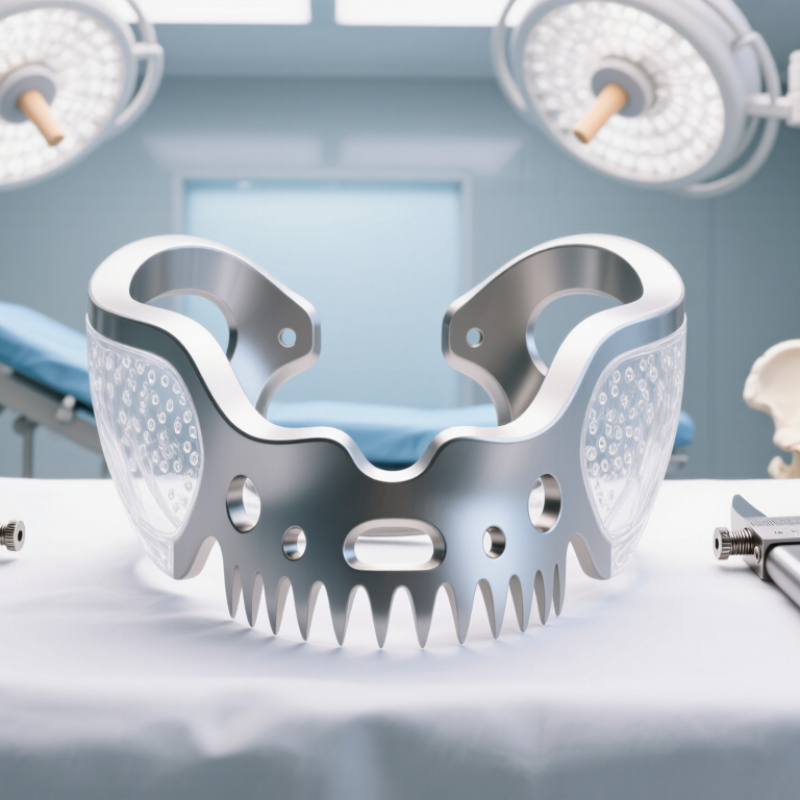
Look closely at the details. Are the teeth sharp enough for stability without damaging endplates? Does the cage restore disc height without creating excessive tension? Are the trial instruments precise in the surgeon’s hand? These practical points matter.
Not every “advanced” feature improves patient outcomes. Marketing language can hide weak documentation. This is where buyers must slow down. Technical files, quality certificates, published data, and traceable manufacturing records deserve attention. Independent clinical feedback also matters, although it may be incomplete.
The best Interbody Fusion Cage is not automatically the newest, lightest, or cheapest model. It is the option that matches anatomy, procedure, and verified clinical needs. Even this judgment is not perfect. Long-term evidence may remain limited for some products, so careful review and professional consultation are essential.
Define Evaluation Criteria: FDA 510(k), ISO 10993, and ASTM F2077 Data
What Is the Best Interbody Fusion Cage from China?
A strong evaluation begins with regulatory evidence, not catalog photographs.
For a Chinese interbody cage, request the complete FDA 510(k) decision summary, not only a clearance number. FDA’s MDUFA performance goals target 90% of traditional 510(k) decisions within 90 FDA days. This timing is useful context, but clearance does not prove clinical superiority. Check the predicate device, intended spinal level, materials, dimensions, and exact indications. Small differences matter.
Biocompatibility evidence should follow ISO 10993’s risk-based framework. The supplier should provide a biological evaluation plan, material specifications, chemical characterization, and relevant test reports. Contact duration and tissue exposure determine the testing strategy. Cytotoxicity alone is insufficient. Look for traceable laboratories, validated methods, sample identification, and clear conclusions. A polished PDF is not proof. I would also compare report dates with the current production material and sterilization process.
ASTM F2077 data should describe the cage’s mechanical behavior under compression, compression-shear, and torsion, when applicable. Ask for sample size, loading rate, fixture design, failure modes, and statistical results. ASTM F2077 is not a substitute for every performance test; subsidence is commonly assessed with ASTM F2267. Reports should identify whether testing used porous structures, teeth, graft windows, or production-equivalent samples. The FDA guidance on intervertebral body fusion devices and ASTM F2077 provide useful benchmarks. Still, laboratory strength is not clinical proof. That distinction is easy to miss.
(Sources: FDA MDUFA performance goals; FDA guidance for intervertebral body fusion devices; ISO 10993; ASTM F2077 and F2267.)
Assess Fusion and Subsidence Rates at 12–24 Months in Clinical Studies
What Is the Best Interbody Fusion Cage from China?
Assess Fusion and Subsidence Rates at 12–24 Months in Clinical Studies
The best interbody fusion cage is not chosen by origin alone. It should demonstrate consistent fusion and limited subsidence in well-designed clinical studies. At 12–24 months, investigators commonly review CT scans, dynamic radiographs, pain scores, and neurological findings. Fusion rates require careful definitions. Some studies accept bridging bone, while others demand motion-free segments on flexion-extension images.
Numbers need context. A high fusion rate may reflect strict patient selection, experienced surgeons, or supplemental fixation. Subsidence may increase with poor bone quality, oversized cages, weak endplates, or excessive disc-space distraction. Cage height, surface structure, graft material, and implant positioning also influence results. These factors should be recorded beside every reported percentage.
When comparing Chinese-made devices, clinicians should examine peer-reviewed evidence, follow-up completeness, imaging methods, and revision rates. Manufacturing consistency matters as much as the cage design. Verification should include material documentation, dimensional accuracy, sterilization controls, and traceable quality systems. A 12-month result can look encouraging, but 24-month follow-up may reveal late settling or incomplete fusion.
The evidence is not always uniform. Different studies use different surgical levels, graft strategies, and patient populations. That weakness makes direct comparisons difficult. In practice, I would question any claim based on fusion rate alone. A cage with modest subsidence and stable clinical improvement may be more useful than one with a higher headline percentage. Careful radiographic review remains essential.
What Is the Best Interbody Fusion Cage from China? — Assess Fusion and Subsidence Rates at 12–24 Months in Clinical Studies
| Clinical Application |
Typical Study Design |
Common Follow-up |
Fusion Rate at 12 Months |
Fusion Rate at 24 Months |
Reported Subsidence at 12–24 Months |
Clinical Interpretation |
| Anterior Lumbar Interbody Fusion (ALIF) |
Prospective or retrospective lumbar degenerative-disease cohorts; radiographic assessment commonly uses dynamic radiographs and/or CT. |
12–24 months |
Approximately 90–98% |
Approximately 94–100% |
Approximately 2–10% |
Usually provides a large graft-host interface and strong restoration of disc height and lumbar lordosis. Subsidence risk is influenced by endplate preparation, implant footprint, bone density, and the use of supplemental fixation. |
| Transforaminal Lumbar Interbody Fusion (TLIF) |
Single- or multi-level clinical series involving degenerative disc disease, spondylolisthesis, or lumbar stenosis; fusion is often judged with radiographs, CT, or both. |
12–24 months |
Approximately 85–95% |
Approximately 90–98% |
Approximately 5–15% |
A widely used posterior approach with generally reliable fusion. Subsidence may increase with small footprints, aggressive endplate preparation, osteoporosis, high cage position, or excessive disc-space distraction. |
| Posterior Lumbar Interbody Fusion (PLIF) |
Retrospective or prospective cohorts, frequently using bilateral cages and posterior pedicle-screw fixation. |
12–24 months |
Approximately 85–95% |
Approximately 90–97% |
Approximately 5–15% |
Fusion outcomes are generally comparable with TLIF in appropriately selected patients. Narrow cages and bilateral endplate violation can increase the likelihood of radiographic subsidence. |
| Lateral Lumbar Interbody Fusion (LLIF/DLIF) |
Clinical cohorts using wide lateral cages for indirect decompression, deformity correction, or degenerative lumbar disease. |
12–24 months |
Approximately 85–95% |
Approximately 90–98% |
Approximately 5–15% |
The wider implant footprint may reduce focal endplate stress, but subsidence remains sensitive to low bone mineral density, endplate injury, cage position, and the use of supplemental posterior fixation. |
| Oblique Lumbar Interbody Fusion (OLIF) |
Prospective or retrospective clinical studies of degenerative disease, spondylolisthesis, or adult spinal deformity. |
12–24 months |
Approximately 85–95% |
Approximately 90–98% |
Approximately 5–15% |
Reported fusion results are favorable when a large-footprint cage is positioned on strong apophyseal-ring bone. Definitions of subsidence differ substantially between studies. |
| Expandable Lumbar Cage |
Comparative or single-arm clinical studies assessing intraoperative expansion, disc-height restoration, and postoperative radiographic outcomes. |
12–24 months |
Approximately 85–95% |
Approximately 90–98% |
Approximately 5–20% |
Expansion can improve disc-space height and foraminal dimensions, but overexpansion may increase endplate stress. Clinical performance depends more on footprint, positioning, fixation, bone quality, and surgical technique than on expansion alone. |
| Cages Used in Osteoporotic or Low-Bone-Density Patients |
Subgroup analyses and observational cohorts; many studies use bone-density screening or radiographic markers rather than uniform osteoporosis criteria. |
12–24 months |
Approximately 75–90% |
Approximately 85–95% |
Approximately 10–30% |
Lower bone quality is consistently associated with higher cage subsidence and delayed fusion. A larger footprint, endplate-preserving preparation, supplemental fixation, and perioperative bone-health management are important selection factors. |
Review Cervical and Lumbar Cage Designs by Surgical Indication
What Is the Best Interbody Fusion Cage from China?
The best interbody cage depends on the surgical indication, not its country of origin. For cervical fusion, a compact cage with controlled lordotic angle may suit single-level disc disease. Its footprint should match the endplate without overhanging the vertebral margin. A radiolucent polymer can support graft assessment, while a porous metal surface may encourage bone ongrowth. Small details matter. Serrated teeth should resist migration without damaging fragile endplates. A standalone design can reduce anterior plate prominence, but it may not fit every patient. Alignment, bone density, and instability still require careful evaluation through radiographs and CT.
Lumbar indications demand broader design choices. TLIF and PLIF often require cages that pass safely through a narrow posterior corridor. A long, curved implant may improve anterior column support, but insertion can become technically demanding. ALIF and lateral approaches usually allow larger footprints and stronger segmental correction. Height and angle should restore alignment without excessively distracting the disc space. Bigger is not automatically better. Excessive endplate pressure can cause subsidence, especially in osteoporotic bone. Surgeons should review fatigue testing, sterilization records, material specifications, and clinical evidence before selecting a cage made in China. No cage compensates for poor endplate preparation. That is an uncomfortable limitation. The final choice should match anatomy, approach, bone quality, and the surgeon’s documented experience.
What Is the Best Interbody Fusion Cage from China?
Cervical and lumbar cage designs should be matched to the surgical indication, approach, anatomy, and fixation strategy. There is no universally best cage design.
Design-priority scores are a qualitative synthesis of commonly used surgical principles: 1 = lower priority and 5 = higher priority. Cervical ACDF emphasizes lordotic restoration and controlled footprint sizing, while lumbar approaches place greater emphasis on endplate support, disc-height restoration, and resistance to migration. These scores are not clinical outcome measurements or brand comparisons.
Rank Chinese Cages by Regulatory, Clinical, Mechanical, and Cost Data
What Is the Best Interbody Fusion Cage from China?
Rank Chinese Cages by Regulatory, Clinical, Mechanical, and Cost Data
The best Chinese interbody fusion cage cannot be chosen by price alone. A practical ranking starts with regulatory evidence. Review NMPA registration, ISO 13485 certification, sterilization records, and traceability controls. Export documentation should match the target market. Missing evidence is a warning sign.
Clinical data deserves greater weight than promotional language. Look for peer-reviewed studies, follow-up beyond two years, fusion rates, subsidence, revision rates, and patient-reported outcomes. A cage supported only by laboratory testing should rank below one with transparent clinical follow-up. Small studies can mislead. I have seen impressive early results weaken after longer observation.
Mechanical testing separates plausible designs from reliable implants. Compare compressive strength, fatigue resistance, endplate contact area, marker visibility, and graft-window volume. Porous structures may improve bone integration, but they can complicate manufacturing consistency. Surface claims need independent verification. Not every “advanced” material performs better in real patients.
Cost should include more than the purchase invoice. Add planning support, inventory, training, revision risk, and import-related expenses. The lowest-priced cage may become expensive after a preventable complication. A balanced ranking would place strong regulatory files, credible clinical evidence, stable mechanical testing, and reasonable total cost above aggressive discounts. Surgeon familiarity still matters. That factor is difficult to measure, but ignoring it would make the ranking less reliable.
Conclusion
Selecting the best Interbody Fusion Cage from China requires a structured evaluation of safety, clinical performance, mechanical strength, and overall value. This article explains how FDA 510(k) clearance, ISO 10993 biocompatibility testing, and ASTM F2077 mechanical data can help assess product quality. It also compares PEEK, conventional titanium, and porous titanium cages, focusing on their imaging characteristics, load-bearing behavior, bone integration potential, and resistance to subsidence.
Clinical evidence is reviewed through fusion and subsidence outcomes reported at 12–24 months, with attention to differences between cervical and lumbar procedures. Cage designs are further assessed according to surgical indication, including footprint, height, lordotic angle, graft volume, and fixation features. Finally, Chinese cages are ranked using a balanced framework that considers regulatory documentation, clinical evidence, biomechanical testing, design suitability, manufacturing consistency, and cost. The goal is to provide a practical, evidence-based method for comparing options without relying solely on price or promotional claims.

 Beren Science & Technology